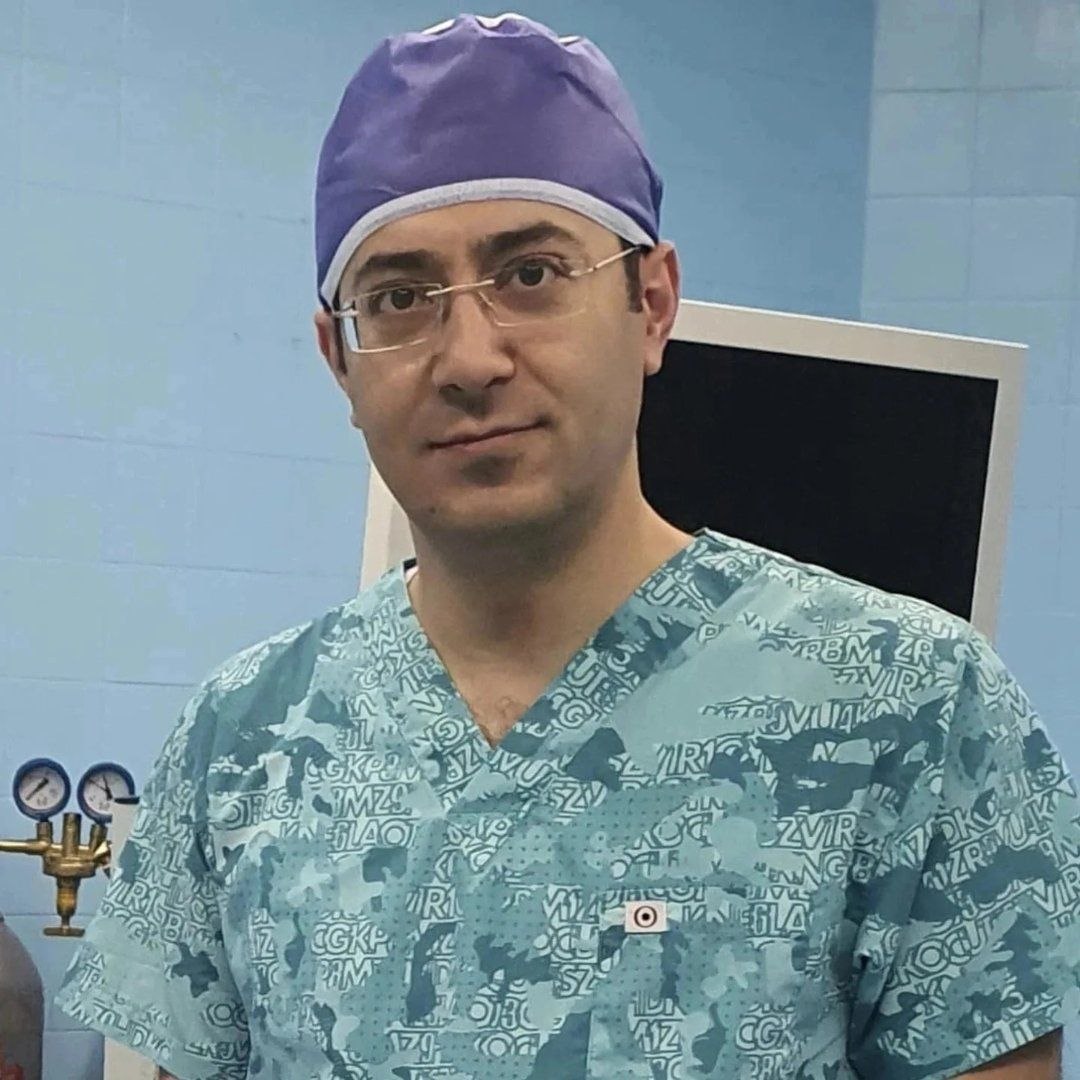
Dr. Seyed Yazdan Ghaffari ranked second in the General Surgery Specialty Board examination, is a faculty member at Tabriz University of Medical Sciences, and holds a fellowship in Colorectal Surgery and Pelvic Floor Disorders from Shiraz University of Medical Sciences.
Dr. Ghaffari's surgical services include colorectal and pelvic floor surgery, bariatric and metabolic surgery, and general surgery. His approach centers on thorough preoperative evaluation, clear discussion of treatment options, and attentive postoperative follow-up.
Credentials & Memberships
Ranked Second in the General Surgery Specialty Board Examination
Faculty MemberTabriz University of Medical Sciences
Fellowship in Colorectal Surgery & Pelvic Floor DisordersShiraz University of Medical Sciences
Philosophy of Care
Precision in the Operating Room, Compassion at Every Step
Surgical success is not solely measured by technique, but by the trust we cultivate with each patient and the quality of life restored beyond the operating theater.
Dr. Seyed Yazdan Ghaffari
10,000+ Successful Surgeries
0+
Successful Surgeries
10 Years of Experience
0
Years of Experience
3 Top Hospitals
0
Top Hospitals
100% Dedicated Care
0%
Dedicated Care
Ranked Second in the General Surgery Specialty Board ExaminationFaculty MemberFellowship in Colorectal Surgery & Pelvic Floor Disorders
Ranked Second in the General Surgery Specialty Board ExaminationFaculty MemberFellowship in Colorectal Surgery & Pelvic Floor Disorders
What We Do
OurExpertise
4 specialties
1
Flagship
Colorectal & Pelvic Floor Surgery
Specialist care for colon and rectal cancers, fecal incontinence, rectal prolapse, severe pelvic organ prolapse, hemorrhoids, fissures and fistulas, including assessment of associated urinary symptoms.
Individual surgical planning for colon and rectal cancer, including advanced cases
Attention to bowel function and continence preservation
Integrated assessment of incontinence, rectal prolapse and pelvic organ prolapse
SASI Bypass, Sleeve Gastrectomy and classic Roux-en-Y (R&Y) Gastric Bypass, with an individualized choice of procedure aimed at lasting weight loss and improved metabolic health.
Bariatric Surgery & Weight Management4 clinical highlights
3
Gastric, Pancreatic & Hernia Surgery
Assessment and surgery for stomach and pancreatic cancers, plus abdominal wall and groin hernia repair. Laparoscopy is considered for suitable patients, with treatment tailored to the condition.
General Surgery & Advanced Laparoscopy4 clinical highlights
4
Appointments
Specialized Consultation
Personalized evaluation and treatment planning tailored to each patient's unique condition, with thorough pre-operative assessment and dedicated post-operative follow-up.
A clear, compassionate 4-stage continuum designed to alleviate hospital anxiety and secure lasting vitality.
Surgery should never feel like a leap into the unknown. Dr. Ghaffari guides you through a disciplined, 4-stage continuum designed to alleviate hospital anxiety, ensure complete physiological preparation, and secure your long-term vitality.
Rigorous diagnostic mapping and individual surgical candidacy
Clinical Setting
Sheikh al-Raees Subspecialty Clinic (Tabriz)
Timeline
Weeks 1–2 Before Surgery
Clinical Overview
Every definitive surgical outcome begins with immaculate diagnosis. In an unhurried, private clinical consultation, Dr. Ghaffari reviews your endoscopic studies, diagnostic imaging (CT/ultrasound), and comprehensive blood chemistry. Together, we analyze procedural options, candidly address all concerns, and establish a clear, evidence-based surgical blueprint.
Dr. Ghaffari's Clinical Assurance
“Every surgical journey starts with clear, unhurried communication and zero pressure.”
Key Stage Deliverables
Detailed personal clinical interview and risk stratification
Endoscopy, colonoscopy, or imaging review directly with Dr. Ghaffari
Comprehensive metabolic panel, coagulation, and organ function labs
Cardiopulmonary clearance and anaesthetic safety verification
1 / 4
Contact our clinical coordinator to schedule your consultation.
Please contact us to confirm consultation hours and arrange an appointment.
Office address
17 Shahrivar, Azerbaijan Tower, 11th Floor, Unit f, Tabriz
Tabriz, Iran
Valiasr Specialty & Subspecialty Hospital, Tabriz
Valiasr Specialty & Subspecialty Hospital in Tabriz is one of Dr. Seyed Yazdan Ghaffari’s practice locations. The surgical venue is confirmed after assessment and admission coordination.
Behboud Hospital in Tabriz is one of Dr. Seyed Yazdan Ghaffari’s practice locations. Please contact the coordinator before attending to arrange surgery and confirm admission requirements.
Sina Hospital in Tabriz is one of Dr. Seyed Yazdan Ghaffari’s practice locations. Admission details and the inpatient venue are confirmed according to the treatment plan.
Honest, evidence-based guidance addressing the most pressing questions regarding minimally invasive surgical safety, hospital costs, realistic recovery timelines, and nutritional transition.
8 questions
Because laparoscopy avoids wide abdominal muscle division and relies on 3 to 5 micro-trocars (5–12 mm), physical trauma is dramatically minimized. During surgery, Dr. Ghaffari applies targeted local anaesthetic nerve infiltration at port sites. Post-operatively, our multimodal pain protocol uses gentle intravenous and oral non-opioid medications, ensuring you awaken comfortable, alert, and able to walk within hours without severe pain.
Key clinical takeaway: Micro-incisions (5–12mm) plus local anesthetic blocks allow comfortable ambulation within 4–6 hours without relying on heavy opioids.
Patient safety is rooted in microscopic precision. In sleeve gastrectomy, Dr. Ghaffari utilizes high-precision tri-staple European technology, maintains strict vascular borders, reinforces the entire staple line with running suture oversewing, and performs an intra-operative methylene blue leak test before closure. In colorectal procedures, high-definition visualization guarantees tension-free, fully vascularized anastomoses.
Key clinical takeaway: Tri-staple European cartridges, continuous reinforcement oversewing, and intra-operative methylene blue leak tests eliminate leak risks.
Coverage at Valiasr, Behboud and Sina hospitals in Tabriz depends on your insurer, the hospital’s contract, the procedure and required approvals. Before admission, confirm coverage and documentation with your insurer and the hospital admissions team.
Key clinical takeaway: Confirm insurance coverage and out-of-pocket costs with the insurer and the relevant hospital before admission.
Dr. Ghaffari practices at Valiasr Specialty & Subspecialty Hospital, Behboud Hospital and Sina Hospital in Tabriz. The surgical venue, admission arrangements and required facilities are confirmed after assessment and coordination with the hospital. Consultations take place on Saturday and Wednesday at Sheikh al-Raees Subspecialty Clinic. Office address: 17 Shahrivar, Azerbaijan Tower, 11th Floor, Unit f, Tabriz.
Key clinical takeaway: Practice hospitals: Valiasr, Behboud and Sina in Tabriz. Consultations: Saturday and Wednesday at Sheikh al-Raees Subspecialty Clinic.
For office and remote professional work, most laparoscopic sleeve, gallbladder, and hernia patients return comfortably within 5 to 7 days. Following colorectal resections, 10 to 14 days is typical. Light driving is permitted after 7 days, once full abdominal reflexes are restored and oral medications are no longer needed.
Key clinical takeaway: Return to desk work in 5–7 days for laparoscopic sleeve/hernia and 10–14 days for colorectal; driving resumes after Day 7.
Gentle walking begins the afternoon of your surgery and is encouraged daily. Brisk walking and light cardio (stationary cycling) resume at Week 2 to 3. Swimming can resume once micro-incisions have completely healed (around Week 4). Heavy abdominal lifting and intense resistance training should wait until 6 to 8 weeks post-op to allow deep fascial consolidation.
Key clinical takeaway: Walking begins on Day 1; light cardio at Week 2–3; gym and heavy resistance training at Week 6–8.
Nutrition progresses across 4 structured phases: Phase 1 (Weeks 1–2): Clear, strained protein-fortified liquids to protect the gastric staple line. Phase 2 (Weeks 3–4): Smooth pureed foods high in lean protein. Phase 3 (Weeks 5–6): Soft, easily chewed solids. Phase 4 (Week 7 onward): Balanced lifelong nutrition emphasizing protein priority, hydration, and mindful eating.
During the first year of rapid weight reduction, daily multivitamin, calcium-vitamin D, and B-complex supplementation is essential to safeguard hair density, bone mineral health, and muscle mass. As your dietary intake stabilizes in the second year, supplements are adjusted based on your routine bi-annual laboratory panels.
Key clinical takeaway: Daily specialized vitamins protect muscle, hair, and bone health during rapid weight loss, tapering to routine maintenance in Year 2.
Have another question about your care?
Our clinical coordinator is available on WhatsApp for your specific questions.